
Elite Air · NYC heating & cooling
Practical answers. Real work.
HVAC care, equipment choices and project notes from Elite Air. Explore the guides below, then contact us about your own system.
Practical guide
Better HVAC repairs start with a clear diagnosis.
A symptom is a starting point, not a parts list. Weak cooling can involve airflow, controls or equipment condition. Describe when the issue happens, which rooms are affected and what changed recently. A photo of the model label and any displayed error can make the first conversation more useful.
Before requesting service, check the user-facing thermostat mode and schedule, and review the filter-care instructions for your equipment. Keep supply and return openings unobstructed. Leave electrical panels, refrigerant work and safety controls to a qualified technician.
Ask what was found, what the proposed repair addresses and how operation will be checked afterward. If repair and replacement are both options, compare the scope, equipment condition, warranty terms and expected maintenance rather than choosing on price alone.
Routine filter care supports airflow, but a fresh filter will not resolve every fault. DOE cooling and maintenance guide.
Everyday efficiency
Use your controls to match your routine.
Start with how the space is used. A useful schedule avoids conditioning an empty space exactly as if it were occupied, while allowing for comfort when people return. Review actual settings instead of assuming that installing a smart thermostat automatically delivers savings.
Heat pumps need compatible controls and appropriate configuration. Large changes in the heating setpoint can interact with backup heat, so ask for a strategy matched to your equipment. Multi-zone and communicating systems may require their own manufacturer controls.
Keep filters maintained and airflow paths clear. When comparing energy bills, consider weather and occupancy changes as well as equipment use; one lower bill does not establish a guaranteed saving. Start with a practical operating plan before buying another accessory.
DOE guidance on heat-pump controls · Explore thermostats and accessories
Buying guide
Choose an accessory for a specific job.
Write down the problem first. A thermostat manages operation; a humidifier adds moisture; a condensate pump moves collected water. These components solve different problems and cannot substitute for one another.
Before choosing an accessory, ask about compatibility with your exact model, installation requirements, maintenance access and replacement consumables. Include future lamp, filter or water-treatment costs in the decision. Avoid buying a collection of upgrades before checking whether each one serves a real need.
For indoor air, start with pollutant sources and ventilation. Filtration can supplement those steps, but it does not remove every pollutant. UV products also need application-specific review. EPA guide to air cleaners.
From our work
New LG VRF system: final startup after installation.
This image from our project gallery shows the final startup stage of a new LG VRF installation. It documents a new-system startup, rather than a diagnostic visit for an existing fault.
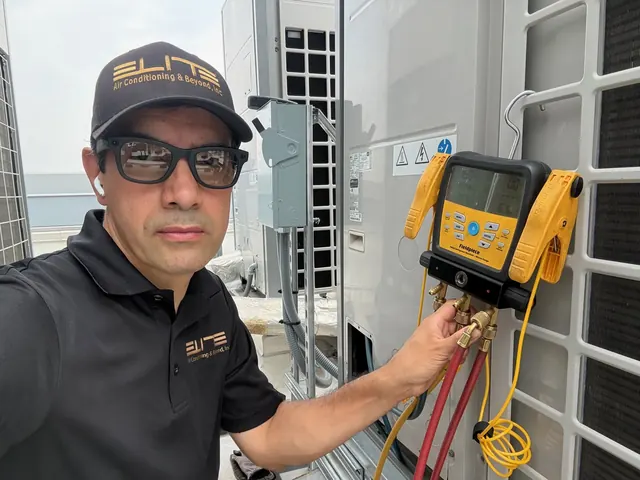
Startup is the transition from installed equipment to operating the system. For a new project, ask how the installer will check operation, explain the controls and provide the handover information for your equipment. The exact steps depend on the system and manufacturer requirements.
Planning a multi-zone installation? Share your property layout, intended room use and existing equipment. These details help frame the discussion before selecting a system.